Saturday February 4 2012
science fair

Hay Infusion

Anonymous: 

This week's experiment is an easy source of protozoa for your regular microscope or your laser microscope. You can even see some of them with a good magnifying glass. To raise your own micro zoo, you will need:

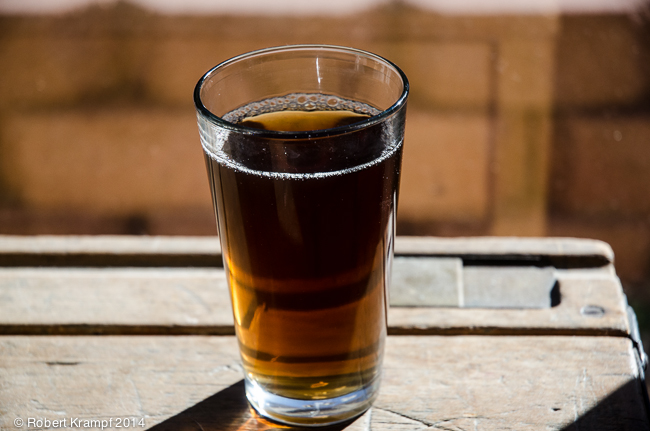
- a glass
- water
- dead grass
- yeast

Fill the glass about half full of water. If you use tap water, let it sit overnight, so most of the chlorine will leave. If you are in a hurry, check your backyard for containers that have some rain water.

Add a handful of dead grass to the water. This can be old yard clippings, grass from that corner of your yard where the grass never does well, or a handful of hay or straw. Then sprinkle in a pinch of baking yeast. Place the glass in a warm place overnight.

For the next week or so, check the water every day with your microscope, looking at drops from the surface, from the grass, and from the bottom of the glass. Within a day or two, you should start to see quite a few protozoa swimming around. Make notes and drawings of the organisms you see, and notice how which are common and which are rare. You should see this change daily as the populations interact.

OK, now for the questions. First, where did the protozoa come from? Many of them were living on the grass. When the grass dies and dries up, the protozoa encyst. They dry up too, but they don't die. Instead, they form tiny cysts where they can remain dormant for a very long time, waiting for rain or other water to make them active again.

Other protozoa arrive through the air. No, they don't have wings. When they encyst, the cysts are smaller than dust, and they are easily carried by the air. Think about the dust that collects on your furniture. Part of that dust is encysted protozoa. When that dust falls into your glass, they become active again.

Next, why did we add the yeast? Yeast are tiny fungi, and they reproduce quickly, feeding on the nutrients from the dead grass. The yeast make excellent food for the protozoa.

At first, the population will be unbalanced. Depending on which protozoa fall into your water, you may have a huge number of one kind, and very few of another. Since they feed on different things, and in different ways, you will probably notice that the common kind will decrease, and the rare kind will boom. These fluctuations can continue for quite a while.

This project has great science fair potential. You might investigate different variables, such as comparing dead grass with dead leaves, live grass, dirt, etc., to see how the results vary. You might also compare the project with rain water and fresh tap water, to see how effective the chlorine really is. Or you could do the same test with a glass of chicken soup, to see how safe it is to leave food sitting out too long. Just be sure that no one eats your project!

Have a wonder-filled week.

Dirty Television

Anonymous: 

Did you know that your television can show you how much smoke, dust and other pollution you have in the air of your home?

This experiment is Subscriber Only content.

Subscribe Now, and get full access to this experiment, and hundreds of other experiments and videos.

This project has science fair potential.

Bouncing Remotes

Anonymous: 

The experiment this week comes from spending too much time in hotel rooms as I travel. As I was packing for the trip home, I found it very useful for adjusting the television when I was not directly in front of it.

This experiment is Subscriber Only content.

Subscribe Now, and get full access to this experiment, and hundreds of other experiments and videos.

This project has science fair potential.

A Real Tuning Fork

Anonymous: 

If you have ever played with a tuning fork, you know that they are interesting and fun, but they can also be expensive. For this week's experiment, we will use a regular fork from your kitchen to produce a beautiful tone. For this experiment, you will need:

This experiment is Subscriber Only content.

Subscribe Now, and get full access to this experiment, and hundreds of other experiments and videos.

This project has science fair potential.

The Hollow Candle

Anonymous: 

This experiment was sent in by Leilah, an 11 year old list member from Indiana. It is exactly the kind of experiment I like, because it is simple, it makes you think, and it’s interesting enough to get you to actually try it, instead of just saying, "Wow, I'll have to try that some time."

This experiment is Subscriber Only content.

Subscribe Now, and get full access to this experiment, and hundreds of other experiments and videos.

This project has science fair potential.

Listening to Lightning

Anonymous: 

I have always loved lightning. Here is a safe experiment that you can try for your next storm.

This experiment is Subscriber Only content.

Subscribe Now, and get full access to this experiment, and hundreds of other experiments and videos.

This project has science fair potential.

The Right Answer

Anonymous: 

Sometimes the right answer is not the only answer.


Sorry, but this content is reserved for subscribers only.

The $20/year subscription helps cover the costs of producing new videos, writing curriculum units, site development, and hosting. Without that support, this site would not be possible.

If you are already a subscriber, and having problems logging in, please check the Support Page.

If you are not yet a subscriber, please check out the Free Stuff page, and Subscribe Now.

join

thumb: 

The Science of Pizza

Anonymous: 

Is the cheese on a pizza really hotter than the crust?


Sorry, but this content is reserved for subscribers only.

Your $20/year subscription helps cover the costs of producing new videos, writing curriculum units, site development, and hosting. Without that support, this site would not be possible.

If you are already a subscriber, and having problems logging in, please check the Support Page.

If you are not yet a subscriber, please check out the Free Stuff page, and Subscribe Now.

join

thumb: 

Measuring in Feet

Anonymous: 

Instead of measuring with a ruler, try measuring with your foot.

This project has Science Fair potential


Sorry, but this content is reserved for subscribers only.

Your $20/year subscription helps cover the costs of producing new videos, writing curriculum units, site development, and hosting. Without that support, this site would not be possible.

If you are already a subscriber, and having problems logging in, please check the Support Page.

If you are not yet a subscriber, please check out the Free Stuff page, and Subscribe Now.

join

thumb: 

Noisy String

Anonymous: 

Learn about sound while annoying.. I mean amusing your friends.

Science Fair Thoughts:

Does the size, shape, or material of the cup change the pitch or volume of the sound? Do different strings produce different pitches?


Sorry, but this content is reserved for subscribers only.

The $20/year subscription helps cover the costs of producing new videos, writing curriculum units, site development, and hosting. Without that support, this site would not be possible.

If you are already a subscriber, and having problems logging in, please check the Support Page.

If you are not yet a subscriber, please check out the Free Stuff page, and Subscribe Now.

join

thumb: 

Selective Smelling

Anonymous: 

How long can you smell something before the scent vanishes?

This project has Science Fair potential


Sorry, but this content is reserved for subscribers only.

Your $20/year subscription helps cover the costs of producing new videos, writing curriculum units, site development, and hosting. Without that support, this site would not be possible.

If you are already a subscriber, and having problems logging in, please check the Support Page.

If you are not yet a subscriber, please check out the Free Stuff page, and Subscribe Now.

join

thumb: 

Measuring Lightning

Anonymous: 

Use the Flash-Bang method to measure how far away the bolt was, and how long it was.


Sorry, but this content is reserved for subscribers only.

Your $20/year subscription helps cover the costs of producing new videos, writing curriculum units, site development, and hosting. Without that support, this site would not be possible.

If you are already a subscriber, and having problems logging in, please check the Support Page.

If you are not yet a subscriber, please check out the Free Stuff page, and Subscribe Now.

join

thumb: 

The Compass and Magnetic Fields

Anonymous: 


Use the compass you constructed in Video 149 to explore magnetic fields, from electric wires to your kitchen cabinets.

This project has Science Fair potential


Sorry, but this content is reserved for subscribers only.

The $20/year subscription helps cover the costs of producing new videos, writing curriculum units, site development, and hosting. Without that support, this site would not be possible.

If you are already a subscriber, and having problems logging in, please check the Support Page.

If you are not yet a subscriber, please check out the Free Stuff page, and Subscribe Now.

join

thumb: 

The Leyden Jar

Anonymous: 


Learn to construct a 25,000 volt Leyden Jar from materials found around the house. This dramatic, yet safe, demonstration is a great way to learn about electrostatics, charges, and circuits.

This project has science fair potential.


Sorry, but this content is reserved for subscribers only.

Your $20/year subscription helps cover the costs of producing new videos, writing curriculum units, site development, and hosting. Without that support, this site would not be possible.

If you are already a subscriber, and having problems logging in, please check the Support Page.

If you are not yet a subscriber, please check out the Free Stuff page, and Subscribe Now.

join

thumb: 

Cartesian Diver

Anonymous: 

Make a diver that will rise and fall at your command, if you know the science.


Sorry, but this content is reserved for subscribers only.

Your $20/year subscription helps cover the costs of producing new videos, writing curriculum units, site development, and hosting. Without that support, this site would not be possible.

If you are already a subscriber, and having problems logging in, please check the Support Page.

If you are not yet a subscriber, please check out the Free Stuff page, and Subscribe Now.

join

thumb: 

Science Photo of the Day

Science Photo


Latest Free Video


Latest Premium Video


Latest Newsletter

This Week's Spotlight:
Combustion

Recently Added Pages

1 day 19 hours ago
3 days 22 hours ago
4 days 1 hour ago
4 days 1 hour ago
4 days 21 hours ago
5 days 5 hours ago
6 days 4 hours ago
6 days 4 hours ago
6 days 5 hours ago
1 week 8 hours ago

Vid-bits

These are short, science oriented videos that don't fit neatly into other categories. Many are just for fun, as I learn more about the world of video.

Performance at Technorama

Fun at Technorama

Manatees

Swallow Tailed Kite

Lightning at the Beach

Big Surprise

HappyTone News: Shuttle Launch NEW!

Electricity shows in Thousand Oaks NEW!

Recently updated Pages

23 hours 45 min ago
1 day 19 hours ago
3 days 5 hours ago
3 days 21 hours ago
4 days 1 hour ago
4 days 1 hour ago
4 days 9 hours ago
4 days 11 hours ago
4 days 11 hours ago
4 days 21 hours ago

Recent comments